Greyhound Racing Calendar: Major UK Events
Best Greyhound Betting Sites – Bet on Greyhounds in 2026
Loading...
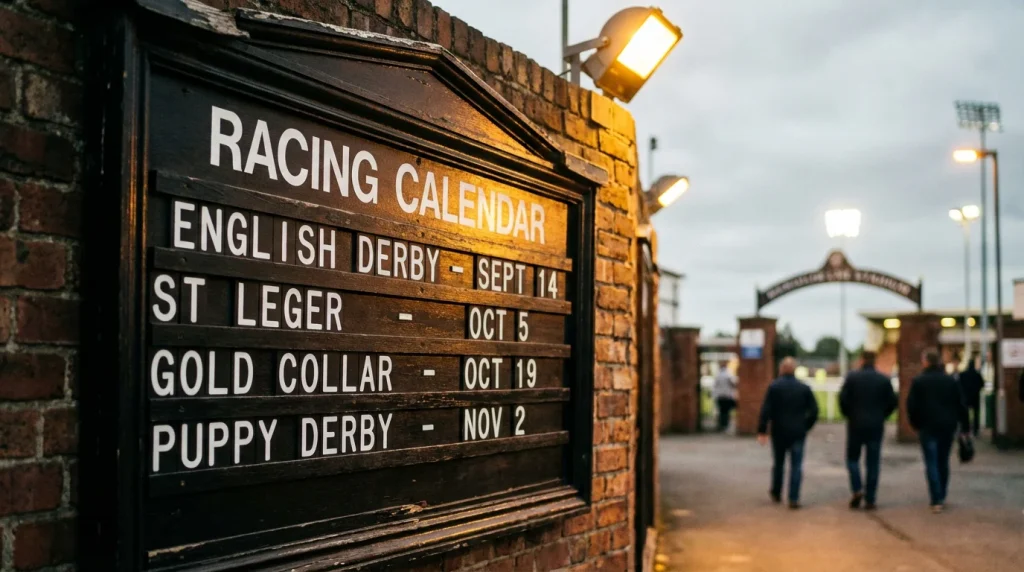
The Greyhound Year: Twelve Months of Major Racing
UK greyhound racing doesn’t have a season — it runs year-round. But the major events cluster around summer and autumn, and they’re where ante-post and each-way value peaks. The calendar provides a rhythm that the serious bettor can plan around: preparation periods before the big competitions, trial seasons that generate early form data, and marquee finals that produce the largest markets and the most concentrated betting opportunities of the year.
Knowing the calendar isn’t about betting every event. It’s about knowing when the landscape changes — when the best dogs emerge from rest, when the competitions that attract the widest ante-post markets begin, and when the routine graded programme takes a back seat to the prestige races that define the sport. Planning your betting around this calendar turns a reactive approach into a proactive one, and proactive punters consistently outperform those who stumble into events without preparation.
Category One Races: The Classics
The English Greyhound Derby, St Leger, Oaks, Cesarewitch and Laurels — these are the races that shape the sport’s history and generate the biggest betting markets. Category One status is the GBGB’s highest classification, reserved for events with significant prize funds and national significance.
The English Greyhound Derby, held at Towcester over 500 metres (GBGB), is the flagship. It typically runs across May and June, with heats, quarter-finals, semi-finals and a final played out over five to six weeks. The ante-post market opens months in advance and is the deepest in greyhound racing. The Derby attracts the best dogs from across the UK and occasionally Ireland, and the final is the single most-watched greyhound race of the year.
The St Leger is the sport’s premier staying event, contested over a longer trip and traditionally held at a different time of year from the Derby, providing a major competition for the staying division. The Oaks is the equivalent for bitches — an all-female competition that generates its own specialist ante-post market. The Cesarewitch is another distance test, while the Laurels has a long history as one of the sport’s most respected Category One invitational events.
Each classic follows a similar format: heats through to a final, run over a defined period at a specific track. The ante-post markets for these events are where the most value sits — prices are wider, the uncertainty is greatest, and the informed punter who has tracked the leading contenders through the open-race programme has a genuine information advantage over the wider market.
Category Two and Invitation Events
Below the classics sit the Category Two events and invitation races that fill the competitive calendar between the major championships. These include the Puppy Derby (for dogs in their first racing season), the Television Trophy, the Kent St Leger, and various regional derbies at individual tracks. The Scottish Greyhound Derby, once a major fixture at Shawfield in Glasgow, has not been held since the track closed in 2020. The Grand National, traditionally a hurdles event, is also now defunct following the closure of Crayford — the last track to stage hurdle racing — in January 2025.
Category Two events carry lower minimum prize funds than Category One but still attract above-average fields and dedicated ante-post markets. They’re often the proving ground for dogs being prepared for the bigger classics — a strong run in a Category Two race during spring can signal a dog’s readiness for a Derby campaign in summer. The puppy events are particularly useful for the ante-post bettor: a dog that dominates the Puppy Derby in its first season is immediately on the shortlist for the senior classics the following year, and the early ante-post prices on such dogs frequently offer genuine value before the wider market catches up.
Invitation events are one-off races or short series staged by individual tracks, sometimes with commercial sponsorship. These don’t always follow the tournament format, and the fields may be selected by the racing office based on ratings or recent form. The betting markets on invitation events are thinner than on the classics, which can create value opportunities for punters with specific knowledge of the invited runners.
Month-by-Month Racing Highlights
January–February: The quietest period for major events. The focus is on standard graded racing and BAGS meetings. Some tracks stage winter competitions — shorter, lower-profile events that keep the competitive programme alive through the coldest months. A good period for building track knowledge and studying form without the distraction of big-event betting.
March–April: The season begins to stir. Puppy competitions start to emerge as first-season dogs enter the graded system. Trials for the summer classics begin, and trainers start to reveal which dogs are being targeted at the Derby and other Category One events. Early ante-post markets may open for the Derby in April, offering the widest prices of the year.
May–June: The Derby heats begin. This is the most active period for ante-post betting, as early-round results refine the market. The Oaks and other classic competitions run in parallel or in sequence. Evening racing is at its best, with longer daylight hours and larger crowds.
July–August: Derby final month. The climax of the greyhound calendar. After the Derby, the summer programme continues with Category Two events and invitation races, but the overall intensity dips as trainers rest their better dogs. BAGS racing remains constant throughout.
September–October: The autumn programme brings the St Leger, Cesarewitch, and several other major staying events. Dogs rested over summer return to competition, and the evening cards strengthen as the best animals come back into training. Ante-post markets for the autumn classics open, offering a second wave of major-event betting opportunities.
November–December: The final major events of the year play out, including the Laurels and various end-of-year invitational competitions. The Christmas period sees a traditional increase in betting activity, and some tracks stage special festive cards. The year closes with the BAGS programme continuing through to New Year’s Eve.
Using the Calendar for Betting Planning
The calendar dictates when ante-post markets open, when trials happen, and when the best dogs are at peak fitness. Planning your betting around these rhythms gives you a structural advantage over punters who react to events as they arrive rather than anticipating them.
Before each major competition, identify the leading contenders from their open-race form. Assess ante-post prices against your own probability estimates. Decide whether to engage early — when prices are widest — or to wait for heat results that provide Towcester-specific or track-specific data. Either approach can work, but both require advance preparation. The punter who checks the ante-post market for the first time on Derby semi-final night has already missed the best-value window.
Between the major events, the calendar is filled with graded racing that offers daily betting opportunities. These quieter periods are when the specialist track punter earns consistent returns — the glamour events generate excitement, but the routine cards generate volume, and volume is where a sustainable edge compounds.
Year-Round: The Calendar Never Stops — And Neither Should Your Discipline
A 12-month sport with no off-season demands year-round discipline. The calendar is your planning tool, not a challenge to bet every event. Use it to identify the periods when your approach is most effective — whether that’s ante-post classics, evening graded racing, or BAGS specialisation — and concentrate your energy and bankroll there. The races that don’t suit your strengths are someone else’s opportunity. Let them pass, and focus on the ones that suit yours.