Greyhound Racing Distances Explained
Best Greyhound Betting Sites – Bet on Greyhounds in 2026
Loading...
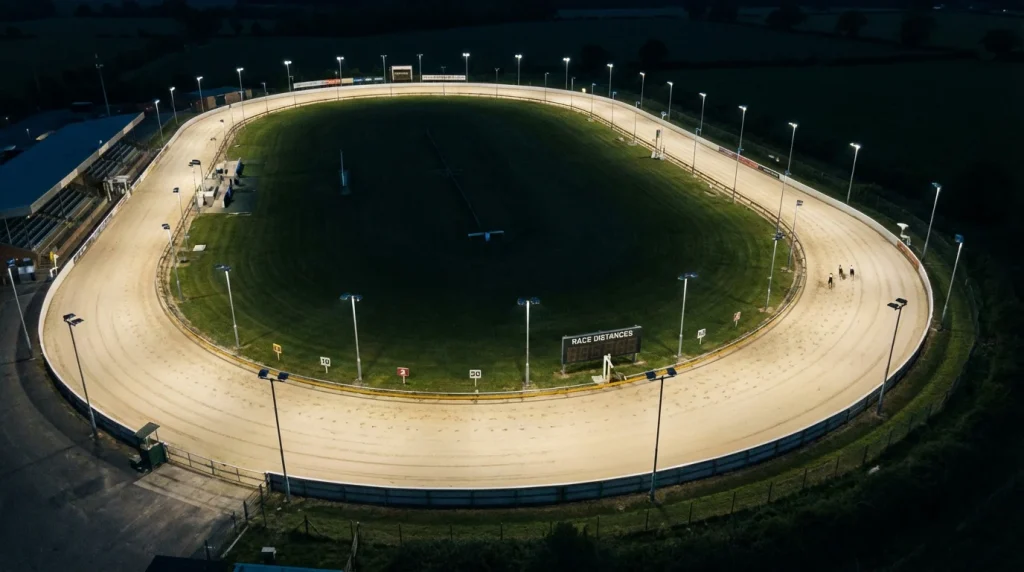
Sprint, Standard, Stay: Distance Is Character
A greyhound’s distance preference is as fixed as its running style — ignore it and you’re betting blind. Just as some dogs naturally hug the rail while others swing wide, every greyhound has an optimal trip: a distance at which its speed, stamina and physiology combine most effectively. A dog bred for explosive two-bend sprints is a fundamentally different athlete from a six-bend marathon specialist, and the racecard tells you which category each runner belongs to.
UK greyhound racing offers three broad distance bands: sprints (roughly 210–285 metres), standard four-bend races (450–500 metres), and middle distance through marathon trips (600 metres and beyond). The standard distance dominates the racing calendar — it’s where the majority of graded racing takes place — but the sprint and staying divisions have their own ecosystems of form, grading and betting dynamics. Understanding what each distance demands from a dog, and how distance preference shapes the betting landscape, is essential groundwork for any punter who wants to assess races rather than guess at them.
Sprint Races: 210–285 Metres
Sprint races are over in under 17 seconds. There’s no recovery, no closing — just raw early pace. The sprint trip covers two bends on most UK circuits, and the race is decided almost entirely by trap speed and the first bend. A dog that breaks fast and leads into the turn is extraordinarily difficult to catch over such a short distance. There simply isn’t enough track remaining for a slower starter to make up ground.
Not every track offers sprint racing. The distances vary by circuit — Romford’s sprint is 225 metres, Crayford runs over 380 metres at its shorter trip, and some tracks don’t stage sprints at all. This inconsistency means that sprint form is less transferable between venues than standard-distance form. A dog that excels over 225 metres at one track may not have an equivalent sprint trip available at another, which limits where it races and how often its form can be tested against different fields.
The dogs that thrive in sprints tend to be lighter, faster out of the traps, and less reliant on sustained stamina. They break hard, reach the first bend in front, and have enough speed through the turn to hold their position to the line. The draw is even more critical in sprints than over standard distances: with only two bends, a bad start or first-bend crowding leaves almost no time to recover. A well-drawn sprint dog with strong trap speed is one of the more bankable selections in greyhound racing, because the race gives its rivals so little time to compensate.
Standard Four-Bend Races: 450–500 Metres
The four-bend trip is the bread and butter of UK greyhound racing. The vast majority of graded races — A1 through A10 — are contested over standard distances, typically 450 to 500 metres depending on the track’s circumference. Towcester runs its standard at 500 metres, Romford at 400 metres over four bends, and most circuits fall somewhere in between. This distance tests both early speed and the ability to sustain effort through four turns and two straights.
The standard distance is where greyhound form is most readable. Dogs race this trip regularly, often weekly, which generates consistent data: times, finishing positions, race comments, and sectional splits that can be compared meaningfully across a dog’s recent runs. The grading system is calibrated to this distance, so a dog’s A-grade level directly reflects its standard-distance ability. When a punter studies a racecard, the standard-distance races offer the richest and most reliable form picture.
The balance between pace and stamina at this distance creates more varied race dynamics than sprints. Front-runners can be caught. Closers can time their runs. Middle runners can find gaps on the bends that don’t exist in shorter races. The trap draw still matters — the first bend remains the decisive point — but the extra two bends give dogs that lose early position a genuine, if not guaranteed, chance to recover. This variability makes standard races the most interesting for form study and the most demanding for accurate prediction, which is why the majority of the betting market and analytical effort sits here.
Middle Distance and Marathon: 600 Metres and Beyond
Stayers are a different breed — slower out but relentless over six or eight bends. Middle distance races (typically 550–660 metres) and marathon trips (680 metres and above) occupy a niche within UK greyhound racing, run at fewer tracks and with smaller pools of specialist dogs. Towcester, Nottingham and a handful of other circuits offer middle-distance and staying events, but many tracks don’t stage them at all.
The physical demands of staying trips favour bigger, more powerfully built greyhounds that can maintain their speed over extended distances. Early pace is less decisive — a dog that leads at the first bend may not have the stamina to hold that lead through six bends, and patient runners who settle in behind the pace can wear down front-runners through the latter stages. This changes the form analysis significantly: sectional times in the closing stages of previous runs become more informative than trap speed data, and a dog’s ability to finish strongly is more predictive of success than its ability to break quickly.
Marathon racing is the most specialist division and carries the deepest form challenges for the bettor. The fields are smaller in population terms — fewer dogs are genuine stayers — which means you’ll see the same runners competing against each other repeatedly. This familiarity can be an advantage: patterns emerge more clearly when the same six dogs race each other every few weeks, and a punter who tracks the staying division at a specific track can develop a detailed understanding of each dog’s capabilities, preferences and vulnerabilities. The marathon market is under-followed and under-analysed by casual punters, which creates pockets of consistent value for the specialist.
How Distance Preference Shapes Form Analysis
When a dog switches distance, the form book resets. A drop from 480 metres to a 285-metre sprint is a different sport entirely. The dog’s standard-distance form — its times, positions, race comments — tells you very little about how it will perform over a trip it hasn’t recently contested. The same applies in reverse: a sprinter stepping up to a standard four-bend trip may have the speed to lead but lack the stamina to hold on.
Distance changes appear on the racecard as a shift in the race specification. Checking whether a dog is running at its usual distance or stepping up or down is a thirty-second job that most punters skip. Those who don’t skip it gain an immediate edge, because the market often prices distance-switching dogs based on their most recent form without adequately adjusting for the change in trip. A dog that ran 29.10 over 480 metres and now races over 680 metres is not the same proposition — its speed figure is irrelevant at the new distance, and the only meaningful form is any previous staying experience it may have.
The practical approach is straightforward. Before assessing any dog’s form, confirm the race distance and check whether the dog has recent form at that distance. If it does, assess normally. If it’s switching distance, treat it with caution — look for any previous runs at the new trip, check whether the switch is a trainer decision (deliberate experiment) or a racing office placement (circumstantial), and adjust your assessment accordingly. A dog with no form at the race distance is a higher-risk selection, regardless of what its standard-distance times suggest.
The Right Trip: Distance as the First Filter
Before you study the draw, the grade, or the trainer — check the distance. Everything else is secondary if the dog isn’t running at a trip that suits it. Distance preference is the most fundamental compatibility factor in greyhound racing, and it’s the easiest one to verify. A ten-second glance at the racecard confirms whether each runner is at its optimal distance, and that single check eliminates a category of error that costs casual punters money on every card they bet.
Make distance your first filter. If a dog is running at the wrong trip, move on. If it’s running at its proven distance, proceed to the draw, the form, the grade. The hierarchy is simple, and the punters who respect it waste less money on selections that were compromised before the traps even opened.