Greyhound Trainers: What to Know
 Available in US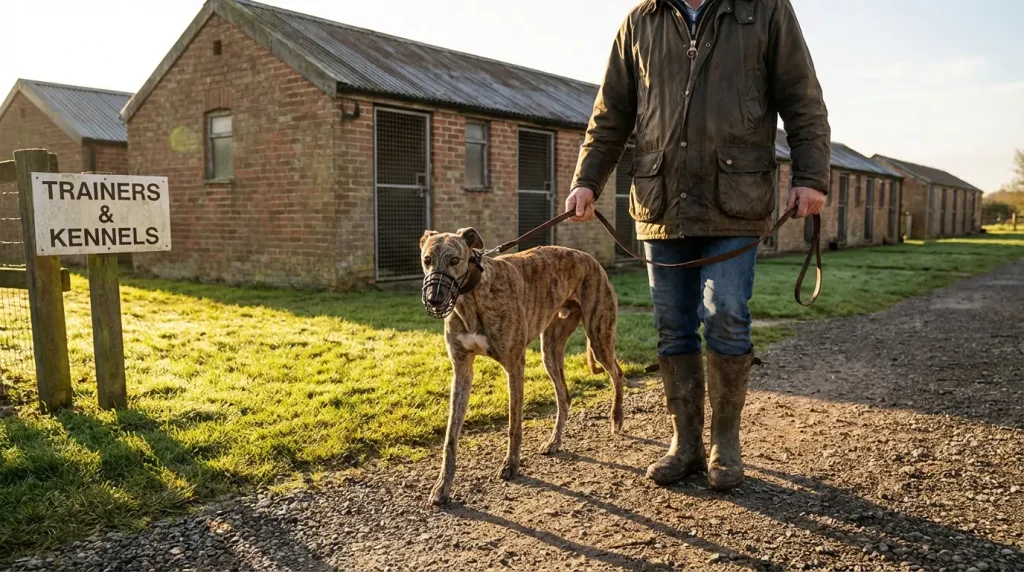
The Trainer’s Hand: Invisible but Decisive
Every greyhound is prepared by a trainer. The best trainers consistently produce race-fit dogs that peak on the right night — and backing their kennels can be a strategy in itself. In horse racing, the trainer’s influence on results is well understood and heavily followed by punters. In greyhound racing, the trainer is oddly undervalued. The name appears on every racecard, but most casual bettors skip past it, focusing instead on form figures, times and trap draws. Get more form data at dogracingbettinguk.
That’s a missed opportunity. The trainer controls almost every variable that determines whether a dog arrives at the track ready to perform. Feeding, exercise, trialling, injury management, race selection, distance choice, track choice — all of these decisions sit with the trainer, and all of them directly affect betting outcomes. A dog trained by a meticulous professional who places it in the right race at the right time is a fundamentally different proposition from a dog managed by a less attentive kennel, even if the two animals have similar raw ability. Understanding what trainers do, and learning to identify the signals that distinguish good kennel management from poor, gives the serious bettor an edge that most of the market ignores.
What Greyhound Trainers Actually Do
A greyhound trainer’s daily work covers feeding, exercise, health monitoring, trialling, and race planning. The dogs live at the trainer’s kennel, and their entire routine — from the food they eat to the gallops they run to the recovery time between races — is managed by the trainer and kennel staff.
Feeding directly affects racing weight and energy levels. A dog carrying too much weight is slow; a dog underweight lacks power. Trainers monitor weight at every weigh-in and adjust feeding accordingly. The weight figure on the racecard is publicly available — a sudden change of half a kilogram or more between races can indicate that the trainer is adjusting the dog’s condition, which may signal a change in fitness or intent.
Trialling is how trainers assess a dog’s fitness and speed between competitive races. A trial is a timed run over the race distance, often conducted at the track where the dog is due to race next. Trial times don’t always appear on the public racecard, but they’re available through track reports and some data services. A strong trial time ahead of a competitive race suggests the trainer is confident the dog is in good form. A conspicuously absent trial — or a slow one — may indicate a dog that’s being eased back from injury or isn’t being targeted at the upcoming race.
Race selection is where the trainer’s influence is most directly felt. Trainers choose which meetings to enter their dogs in, at which track, over which distance, and at which grade level. A trainer who enters a dog at a track that suits its running style and at a grade where it’s competitive is setting it up to succeed. A trainer who enters the same dog at an unsuitable track or an inappropriate grade is wasting a race — and the punter’s money if they back it. Recognising whether a dog has been placed intelligently is a skill that comes from knowing the trainer’s patterns, and it rewards the punter who pays attention to kennel tendencies over time.
Tracking Kennel Form and Strike Rates
A trainer running at 25% strike rate at Romford is a different proposition from one running at 12%. Kennel form data is freely available — most punters never check it. The Racing Post and several dedicated greyhound data sites publish trainer statistics broken down by track, time period and grade. These figures tell you how often a trainer’s dogs are winning, whether the kennel is in a hot or cold phase, and whether the trainer has a particular affinity for certain circuits.
Strike rate alone doesn’t tell the whole story, but it’s a powerful first filter. A trainer with a 20%+ strike rate at a given track is consistently placing well-prepared dogs in races they’re capable of winning. A trainer at 10% is either entering dogs at the wrong level, managing their condition poorly, or simply operating with lower-quality stock. Both scenarios carry betting implications: the high-strike-rate kennel justifies shorter odds, while the low-strike-rate kennel should face scepticism even when one of its dogs looks well in on form.
Kennel form also has momentum. A trainer whose dogs have won four of their last fifteen starts at a specific track is in form — the kennel is running well, the dogs are healthy, and the trainer’s judgement on race selection is landing. A trainer whose dogs have won one of their last twenty starts may be dealing with illness in the kennel, a string of injuries, or a transition period as older dogs retire and younger ones develop. Tracking these patterns over weeks and months gives you a sense of which kennels to follow and which to avoid — and that’s information the casual punter, looking only at the individual dog’s form line, will never have.
Trainer Signals: What to Watch For
Trainers communicate through their actions, and the racecard records those actions if you know where to look. Several patterns are worth monitoring because they indicate deliberate decisions that affect betting value.
A dog dropping in grade is one of the most common signals. Was the drop forced by poor results, or was it a deliberate move by the trainer to place the dog in an easier race? The form comments help here: if the dog was beaten narrowly at a higher grade with excuses (slow away, crowded, checked), the drop may be strategic — the trainer is giving the dog a confidence booster at a lower level, expecting it to win comfortably. This is one of the most reliable positive signals in greyhound racing and consistently produces winners at value prices.
Distance switches are another signal. A trainer moving a dog from the standard trip to a sprint, or from standard to middle distance, is experimenting — and experiments have consequences. If the switch is based on observed running characteristics (the dog lacks stamina over four bends, suggesting a sprint might suit better), it can produce an improved performance. If the switch seems arbitrary or forced by scheduling, it’s less reliable. Checking whether the trainer has made similar distance moves with other dogs in the past — and whether those moves proved successful — provides context that the single racecard entry doesn’t.
Returns from layoffs deserve attention too. A dog reappearing after a break of three weeks or more has been away for a reason: injury, rest, or strategic absence. The trainer’s track record with layoff returns matters. Some trainers are known for bringing dogs back race-fit after a break — their returners win first time back at a higher rate than average. Others tend to use the first race back as a fitness run, with the dog not fully wound up. If you know your trainer’s pattern, you can price the returner appropriately rather than guessing. Also explore our greyhound form guide.
The Kennel Edge: Backing Preparation Over Promise
The dog runs the race. The trainer decides which race it runs, when it runs, and how fit it is on the night. That preparation is the hidden variable in greyhound betting — the factor that doesn’t appear in the form figures or the speed ratings but influences the result as much as anything that does. The punter who tracks trainers, monitors kennel form, and reads the signals embedded in race selection and grade changes is working with a deeper dataset than the punter who ignores the trainer column entirely. Over time, that depth converts into an edge — quiet, consistent, and invisible to the rest of the market.
