
BAGS Greyhound Racing Explained
 Available in US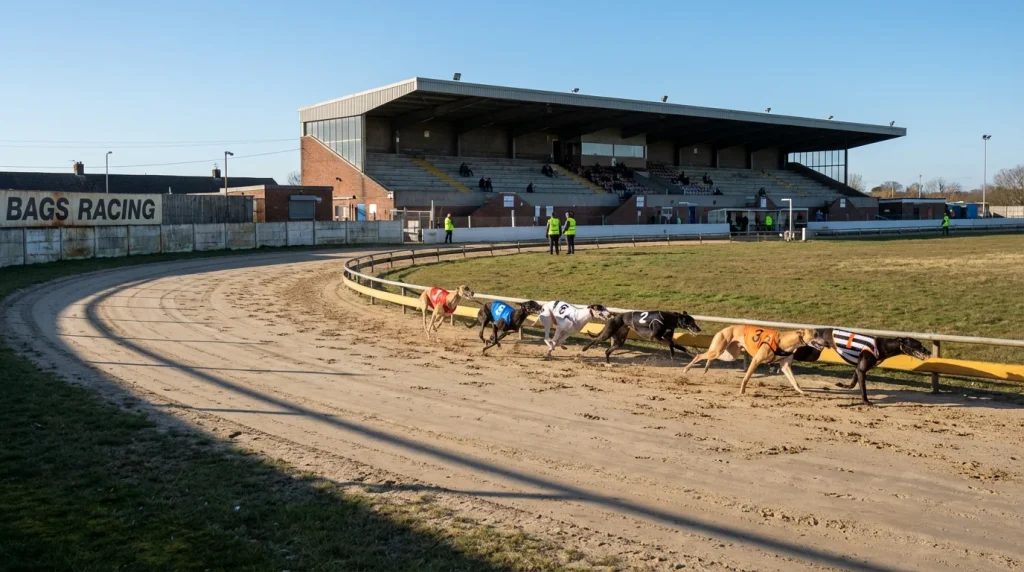
BAGS: The Engine That Keeps Dog Racing in Betting Shops
If you’ve ever placed a greyhound bet in a betting shop on a Tuesday afternoon, you were betting on a BAGS race — whether you knew it or not. The Bookmakers Afternoon Greyhound Service is the financial and logistical infrastructure that keeps UK greyhound racing commercially viable. It exists to supply a continuous stream of live racing content to betting shops and online sportsbooks throughout the day, providing the raw material that bookmakers need to keep their greyhound betting counters active during afternoon hours. Find more racing guides at dogracingbettinguk.
BAGS racing accounts for a significant proportion of all UK greyhound meetings. It runs daily, funds the tracks that host it, and generates the majority of off-course greyhound betting turnover. For the punter, understanding what BAGS is and how it differs from evening racing isn’t trivia. It’s context that affects the quality of the fields, the reliability of the form, and the types of betting angles that produce results.
What Is the Bookmakers Afternoon Greyhound Service?
BAGS is a collective arrangement between major UK bookmakers and licensed greyhound tracks. The bookmakers pay tracks to stage afternoon racing — typically between 10:30am and 5:00pm — and in return receive the rights to broadcast those races into betting shops and on their digital platforms. The service is coordinated centrally and funded by levies from the bookmaking industry, which makes it the primary revenue stream for many participating tracks.
The operational principle is straightforward: bookmakers need betting product throughout the day. Horse racing doesn’t start until early afternoon and has gaps between meetings. BAGS fills those gaps with a reliable, scheduled flow of greyhound races, one roughly every fifteen minutes, cycling through different tracks. For the bookmaker, it’s a revenue generator — punters in shops and online bet on BAGS cards steadily throughout the afternoon. For the tracks, it’s a guaranteed income that subsidises prize money, maintenance, and staff costs.
The races staged under BAGS are standard graded events — A1 through A10, sprint and middle-distance grades — using the same rules and regulations as evening racing. There is no separate BAGS rule book. The dogs are the same registered GBGB greyhounds, the trainers are the same licensed professionals, and the grading system operates identically. What differs is the context: the timing, the atmosphere, the crowd size (usually minimal), and in some cases the composition and competitiveness of the fields.
BAGS Schedule: Which Tracks Run When
BAGS meetings run every day of the week, spread across multiple tracks to ensure continuous coverage. The exact schedule rotates, but the general pattern is that three to five tracks host BAGS meetings each afternoon, with staggered race times so that there’s always a race going off within a few minutes at any point during the afternoon.
Tracks that regularly feature on the BAGS roster include Romford, Crayford, Swindon, Peterborough, Perry Barr, Central Park (Sittingbourne), Doncaster, Sunderland, and several others. Some tracks host BAGS meetings on specific days of the week — a track might run BAGS on Mondays, Wednesdays and Fridays, and evening racing on Tuesdays and Saturdays. Other tracks alternate on a weekly or monthly rotation.
The schedule is published in advance by SIS (Sports Information Services), the data and media provider that broadcasts BAGS races to bookmakers. It’s also available through the Racing Post and most major betting sites’ greyhound sections. Knowing which tracks are running BAGS on a given day matters because some tracks suit your analysis strengths better than others — and because form from different BAGS tracks varies in quality and readability.
BAGS vs Evening Racing: Key Differences for Punters
On paper, BAGS racing and evening racing are identical. Same rules, same tracks, same grading. In practice, the punter who treats them identically will miss some important nuances.
Fields in BAGS racing can be slightly weaker on average than evening cards. Evening meetings are the traditional flagship sessions, where the better dogs are often entered by trainers seeking higher prize money and more competitive fields. BAGS meetings, with their lower profile and smaller crowds, sometimes attract entries from the middle and lower grades, with fewer top-tier dogs on the card. This isn’t universal — some BAGS meetings at prominent tracks feature strong fields — but the tendency exists and affects the reliability of form.
Betting market dynamics also differ. BAGS races typically attract less money than evening meetings, which means the market is thinner. Thinner markets are more volatile: a single significant bet can move prices more sharply, and the starting price may diverge more from the early price than in well-traded evening markets. For the punter, this can work both ways. You might find value more easily in poorly traded BAGS markets, but you’re also more exposed to sudden price shifts that erode the odds you planned to take.
The pace of BAGS racing is relentless. With races every fifteen minutes across multiple tracks, there’s a constant temptation to bet on the next race before you’ve properly studied it. This frequency is the single biggest risk factor of BAGS betting: not the quality of the racing, but the volume of opportunity encouraging impulsive decisions. The punters who profit from BAGS are the ones who select their spots carefully, ignoring the majority of races and engaging only with the ones where their analysis gives them an edge.
Betting on BAGS: Angles and Considerations
BAGS racing rewards the specialist. Because the fields are sometimes less competitive and the markets less efficient, the punter who knows a specific BAGS track well — its trap biases, its regular runners, its grading tendencies — can find consistent value that broader market participants miss.
One productive angle is tracking newly graded dogs making their BAGS debuts. A dog transferring from another track or returning from a layoff may be initially mis-graded for BAGS competition, creating one or two races where it’s significantly better than its opponents before the racing office corrects the grade. These opportunities are brief but profitable when they arise.
Another angle is weather sensitivity. BAGS runs through all conditions — rain, heat, cold — and afternoon track conditions can differ from evening conditions at the same venue. A track that was watered in the morning for a BAGS meeting may play differently from the same track under floodlights in the evening, and dogs with specific surface preferences may benefit or suffer accordingly.
Discipline is the overarching consideration. BAGS offers a huge volume of races. The profitable approach is to treat it like a buffet with mostly average options: scan the full menu, pick the two or three dishes that stand out, and leave the rest on the counter.
The Afternoon Edge: Why BAGS Rewards Specialists
The punters who lose on BAGS bet too many races. The punters who profit from BAGS bet very few. The difference is selectivity, and BAGS racing, with its relentless pace and constant availability, makes selectivity both more important and harder to maintain. Also check our UK racing calendar.
Specialise in one or two BAGS tracks. Learn the runners, the trainers, the trap biases and the grading patterns at those specific venues. Ignore everything else on the afternoon schedule. That narrow focus, applied consistently, is how BAGS racing becomes a genuine betting resource rather than a time-filling distraction between the morning commute and the evening card.
